ServicesWhole-house carbon filtration
Whole-House Carbon Filtration in DeSoto
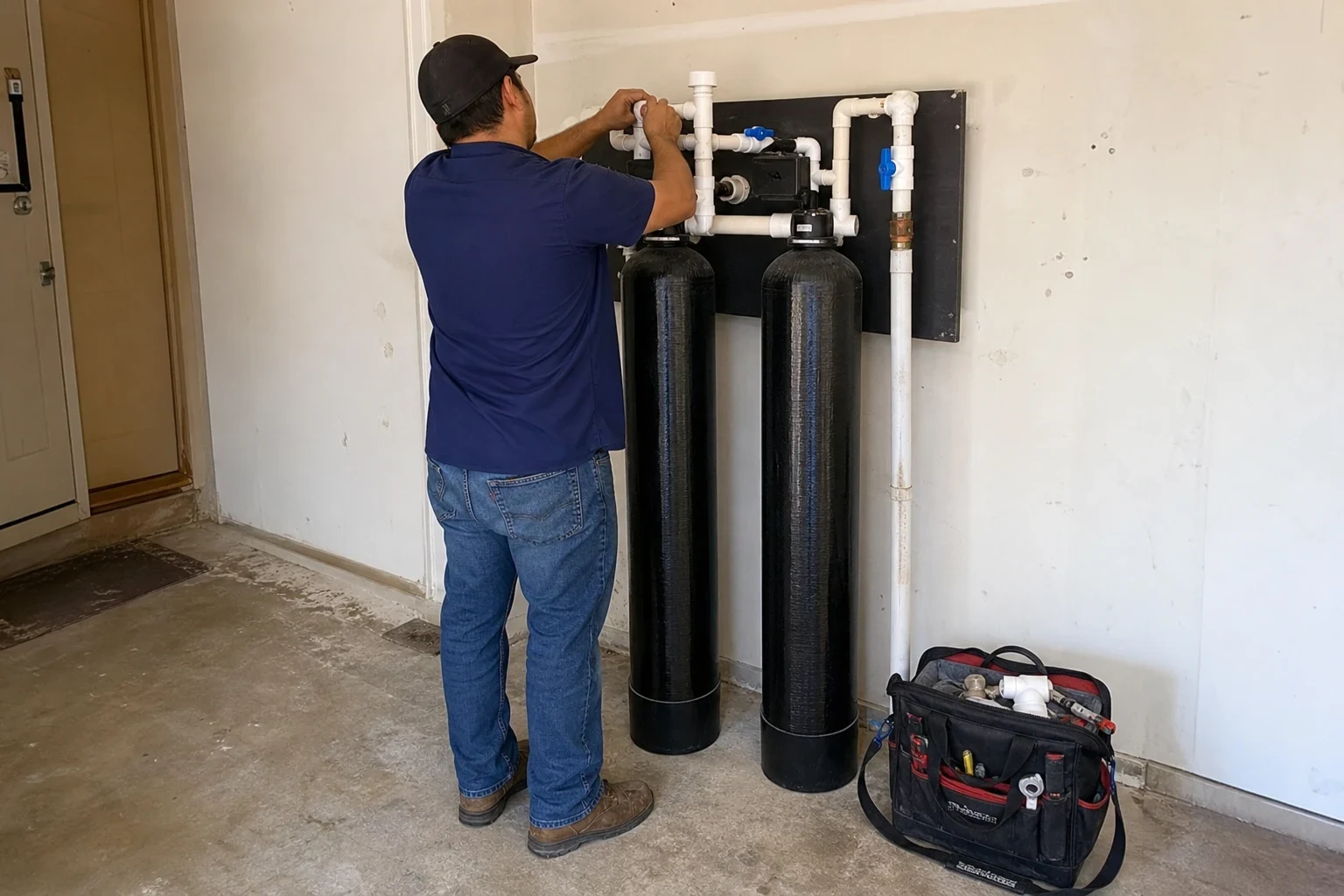
City water is treated to be safe, and that treatment often leaves a pool-like taste and smell behind. A carbon filter on your main line removes it before the water reaches any tap. We explain how it works, size it to your home and install it with care.
How whole-house carbon filtration works
Activated carbon, usually made from coconut shell or coal, is full of tiny pores. Water flows through it, and chlorine along with many taste and odor compounds cling to the surface. What comes out has no taste or smell, at the kitchen sink and in the shower alike.
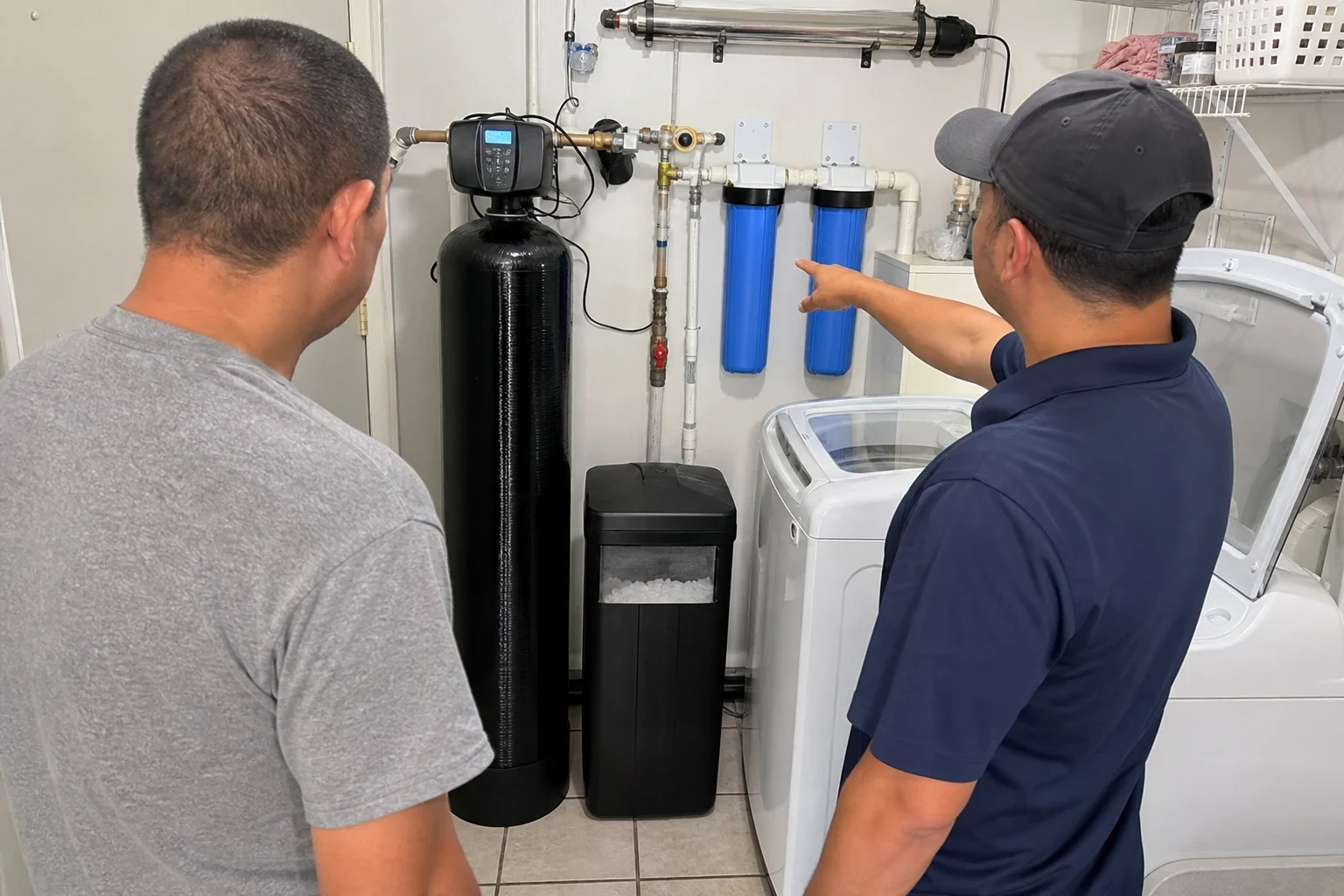
A lot of utilities use chloramine in place of plain chlorine. It is harder to remove, and regular carbon does a poor job with it. In those cases we use catalytic carbon in a tank big enough to keep water in contact with the media longer. Your utility's yearly water quality report names its disinfectant, and we are glad to go through it with you.
Carbon is the right choice when the problem is taste, odor, or dry skin and hair after a shower. It will not soften water or take out iron, and it does not stand in for under-sink reverse osmosis if you want the most thoroughly treated drinking water.
What comes with the install
Sized for your water use
We consider your pipe size, how many bathrooms you have and how your family uses water. A tank that is too small cuts pressure and wears out fast, so we size for actual demand, not the smallest unit that will fit.
The right media for your disinfectant
Regular activated carbon removes plain chlorine easily. Chloramine clings tighter and calls for a catalytic grade. You will know which media goes in your tank, and why, before we fill it.
A sediment prefilter
A basic cartridge in front of the carbon traps sand and grit, keeping the carbon bed clean and extending its life.
A bypass valve
The bypass routes water around the system during service or when you fill a pool, so maintenance never leaves the house without water.
A sensible location
We put the system somewhere easy to get to and out of the sun and hard freezes, often in the garage by the main line. Systems mounted outside get insulation and a cover.
Cleanup and a quick lesson
We flush the new media, check each joint for leaks, tidy the area and show you how to use the bypass and change the prefilter.
Signs your home could use carbon filtration
- Tap water smells like a pool
- That sharp smell is the disinfectant. It is a sign the water was treated, not that it is unsafe, but carbon removes it.
- Coffee and tea taste flat or off
- Chlorine compounds change the flavor of anything brewed or cooked in tap water. Many people notice it first in their morning coffee.
- Dry skin or hair after showering
- Hot water releases chlorine into the steam you breathe and onto your skin. A pitcher filter cannot help here, but a whole-house system can.
- You filter at one tap and want it everywhere
- If you already use a fridge filter or pitcher and like the difference, a main-line system extends it to every faucet, shower and appliance.
- Stronger odor in some seasons
- Utilities sometimes raise disinfectant levels for a period, and the change is easy to notice. Carbon smooths out those swings.
How the work goes
- 1
A conversation and a look at your water
We start by phone, then visit to see where your main line enters and how the plumbing is laid out. If you have questions beyond taste, we may suggest water testing first so you buy the right equipment.
- 2
A written recommendation
You get a plain written estimate showing the system, the media, the prefilter and the labor, line by line. If carbon alone will not solve your concern, we say so.
- 3
Installation day
We shut off the water, cut into the main line and set the system on a level base with a bypass. Most installs take part of a day, and we protect floors and walls along the path we work.
- 4
Flush, test and hand off
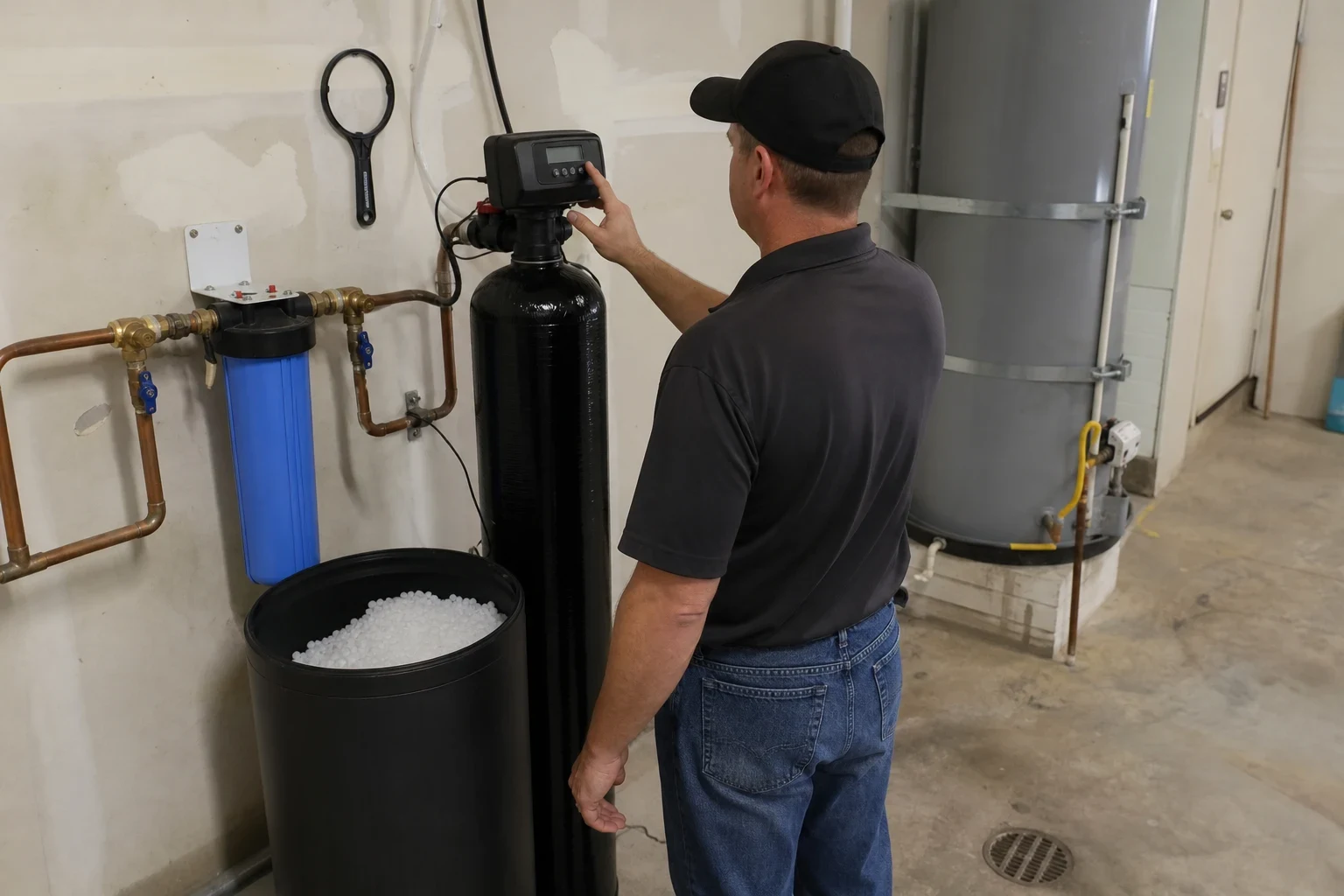
We flush the carbon until the water runs clear, check pressure at a few taps and explain when the prefilter and media will need attention.
What moves the price
There is no single price for whole-house carbon filtration, because homes and water differ. The factors below are what change it most. We put each one in writing before any work starts.
- Chlorine or chloramine
- Chloramine calls for catalytic media, which costs more than ordinary carbon and usually needs a larger tank.
- Size of your home and pipe
- More bathrooms and a wider main line call for a larger tank and more media to keep pressure steady.
- Where the line enters
- An easy garage connection takes less time than an outdoor or tight location that needs extra fittings, insulation or a cover.
- Existing plumbing condition
- Old or corroded valves near the main sometimes need replacing so the new system can be isolated and serviced properly.
- Add-ons you choose
- A sediment prefilter is standard. Pairing the system with a softener or iron filter adds equipment and labor.
Whole-house carbon filtration questions
- Does a carbon system reduce water pressure?
- Not noticeably, if it is sized right. Lost pressure usually comes from a tank too small for the household or a clogged prefilter, which is why we size to your pipe and number of fixtures.
- When does the carbon have to be replaced?
- That depends on your water use and the media; catalytic carbon for chloramine usually wears at a different rate than standard carbon. The sediment prefilter needs changing much more often. Our filter replacement and maintenance service keeps both on track.
- Will it take out lead?
- A whole-house carbon system is picked for chlorine taste and odor, not lead. Lead mostly comes from older pipes inside the house, so testing and, if needed, under-sink reverse osmosis at the kitchen sink is the better route.
- Does it make water softer?
- No. Carbon leaves the calcium and magnesium behind hardness in place. If you see scale, we recommend a hardness test before looking at a softener.
- Is water safe to drink once the chlorine is gone?
- Yes. The disinfectant has finished its work by the time water gets to your house. Use filtered water as you normally would rather than storing it a long time, just like any fresh tap water.
Find out what carbon filtration would do for your home
Tell us what you notice in your water and we will explain, plainly, whether a carbon system fits. We work in DeSoto and nearby towns including Cedar Hill, Duncanville and Lancaster.