ServicesWater softeners
DeSoto Water Softeners, Only After a Hardness Test
A softener costs real money and stays in your home for years. So we first measure how hard your water is. If the number calls for one, we size and install a softener to match. If it does not, we say so plainly.
How a softener works and when you need one
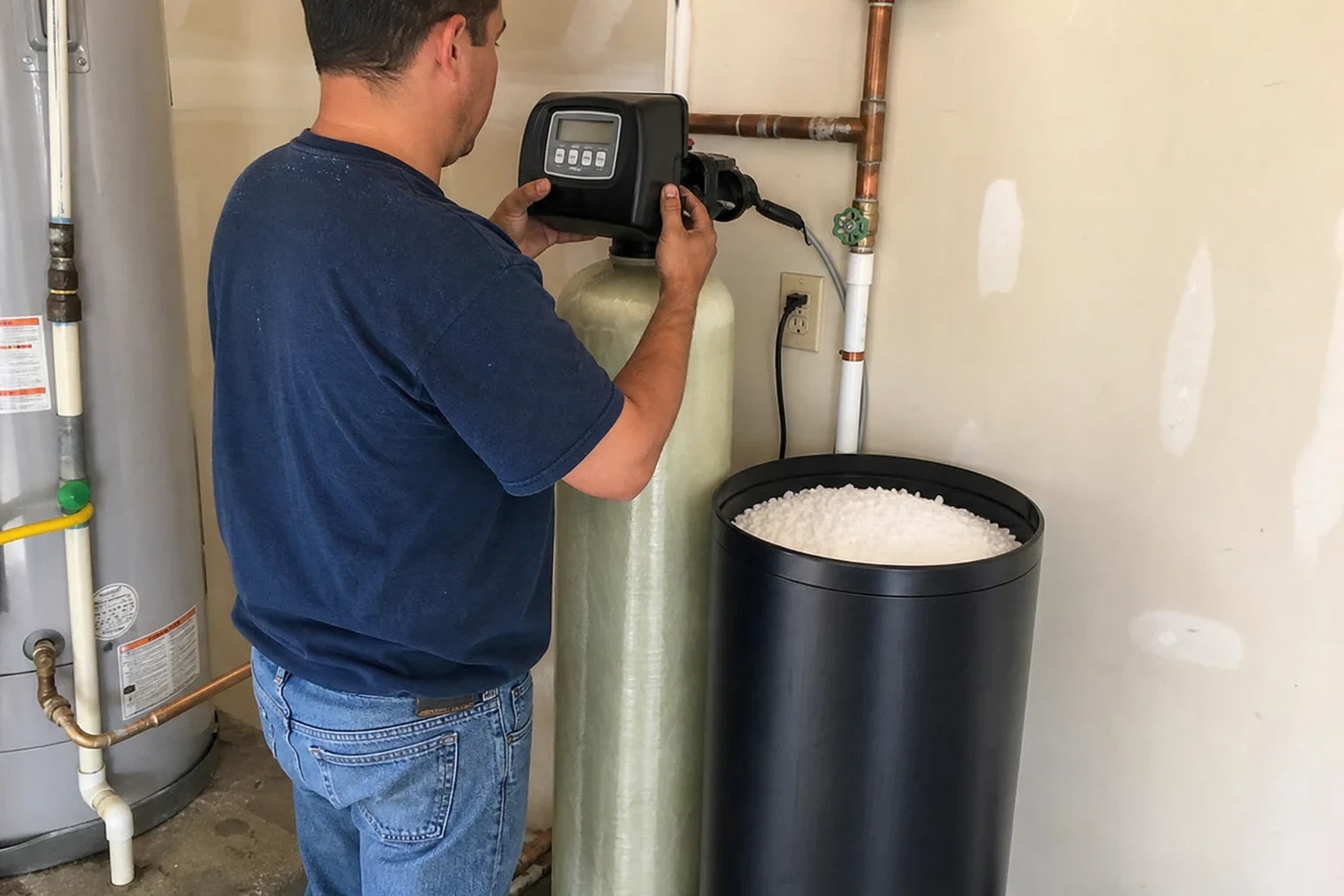
Hard water holds dissolved calcium and magnesium. Inside a softener, water flows through a tank of resin beads that trade those minerals for sodium or potassium, a process called ion exchange. Once the beads are loaded, the unit flushes them with brine from the salt tank and resets. That flush is called regeneration.
Hardness is counted in grains per gallon. Below roughly 3.5 grains, water is usually called soft, and plenty of homes never need a softener. Others, including some private wells near DeSoto, test far higher. Measuring at your tap is the only fair way to tell, so every softener discussion with us starts there.
When the reading is low, we explain what is really behind the spots or buildup and steer you to the right fix. That may be iron and sediment filtration, or just a change in how the fixtures get cleaned.
What the job covers
- Hardness measured at your faucet
- We read hardness in grains per gallon and check for iron, since iron changes how a softener should be set. You watch the result come up.
- Sized from your results
- The right capacity comes from your hardness reading and your household's water use. We size from both so the unit regenerates at a reasonable pace, not nonstop and not too seldom.
- A metered valve
- We prefer valves that regenerate once a measured volume of water has passed through. They use less salt and water than older timer valves that rinse on a set day no matter what.
- A clean install with a bypass
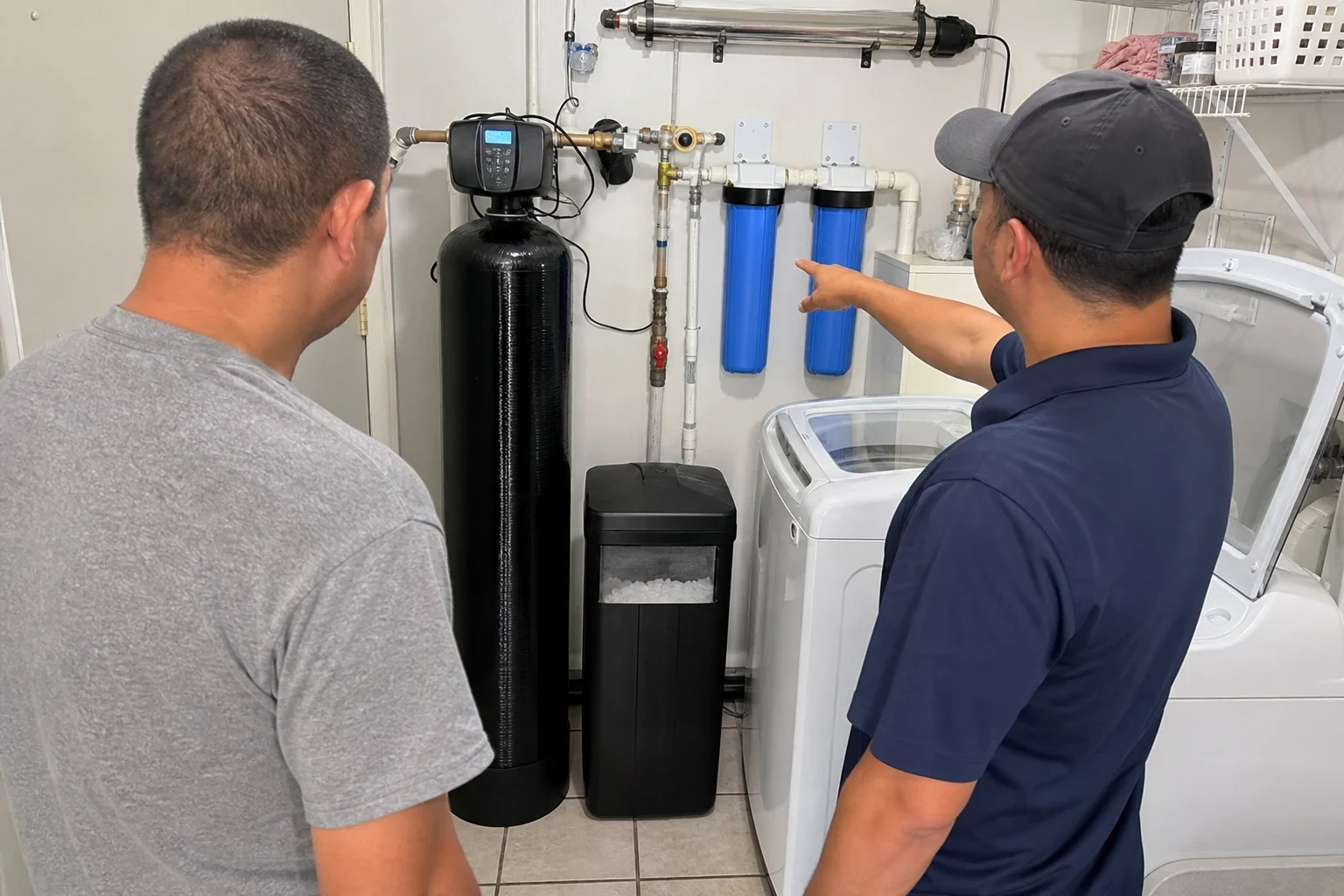
- We connect to the main line, add a bypass so the softener can be cut out without turning off the house, and route the drain line properly with an air gap. Nearby floors and walls stay covered.
- Settings and a simple tour
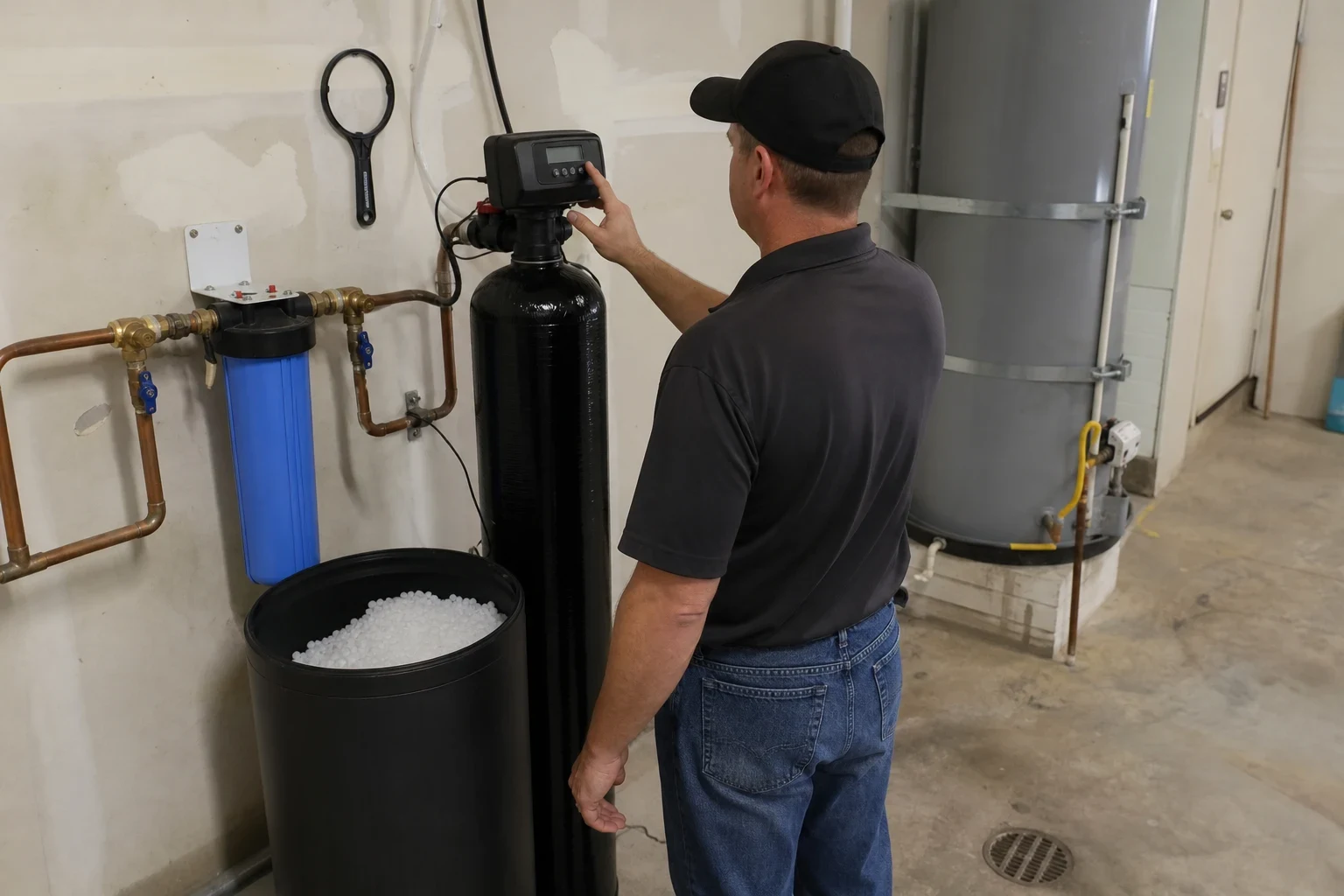
- Before leaving, we enter your hardness and household settings, show you where the salt goes and how to read the screen, and tell you what a normal regeneration sounds like.
When a hardness test makes sense
Chalky buildup on taps and showerheads
White rings on aerators and spray holes are typical mineral scale. Vinegar takes it off, and then it returns.
Spotty glasses out of the dishwasher
A cloudy film on glasses can mean hard water, or it can mean the wrong detergent. That is one reason we test before suggesting anything.
Soap that barely suds
Hardness minerals tie up soap, so you use more shampoo and body wash to get a lather, and a dull film is left on skin and tile.
Popping or rumbling from the water heater
Scale collects at the bottom of a tank heater and crackles as water boils through it. It also slows heating and cuts the heater's life short.
Your water comes from a well
Hardness and iron in well water can differ a lot from one property to the next. Testing shows what your well actually produces.
How the work goes
- 1
A conversation by phone
You tell us what you've noticed and how your home is plumbed. We set a time to come test.
- 2
Testing and an honest answer
We test at the tap and explain the results in plain terms. If a softener isn't warranted, we say so and suggest what would actually help.
- 3
A written estimate
If a softener makes sense, you get a line-item estimate that lists the unit, the valve, any plumbing changes and any prefilter. Nothing is installed until you've read it and agreed.
- 4
Installation day
Most installs happen where the main line enters, often in a garage or utility area near the water heater. Water is off for part of the visit. We check whether your city requires a plumbing permit and handle it if so, then clean up and leave the area as we found it.
- 5
Programming and follow-through
We load the first salt, program the valve to your test results, run a test regeneration and check your tap water again so you can see the difference.
What moves the price
Softener pricing depends far more on your home and your water than on the brand name on the tank. We explain each piece of the estimate so you know what you are paying for. A short look at the plumbing usually answers most of the open questions.
- Hardness level and capacity
- Harder water and larger households need more resin to avoid regenerating every day. A correctly sized unit costs more up front than an undersized one but uses salt more efficiently.
- Existing plumbing access
- Some homes have a pre-plumbed softener loop. Others need new piping to bring the main line to a workable spot, which adds time and materials.
- Drain and power
- The softener needs a drain for its rinse water and an outlet for the control valve. If neither is close, running them is part of the job.
- Chlorine protection
- Chlorine in treated city water slowly breaks down softener resin. A carbon prefilter, or pairing with whole-house carbon filtration, protects it and adds to the initial cost.
- Valve type
- Metered valves cost a little more than basic timer valves and tend to repay that through lower salt and water use.
Common water softener questions
Something not covered here? (972) 362-9704
Does softened water taste salty?
For most homes, no. The sodium added matches how hard the water was, so moderately hard water picks up very little. If you want to skip it in drinking water, under-sink reverse osmosis at the kitchen sink takes most of it out, or the softener can run on potassium chloride instead of salt.
Why not install one without a test?
Many homes simply don't need one. On soft water, a softener costs money, burns through salt and water, and fixes nothing. A quick test keeps the choice based on your own numbers.
Will a softener take out chlorine or improve taste?
No. It only swaps out hardness minerals. Whole-house carbon filtration is the tool for chlorine taste and smell, and it shields the softener's resin as well.
How often does it need salt?
That depends on hardness, household size and tank size. Most people look in the brine tank once a month and add salt when it falls below the water line. We show you what to look for during the walkthrough.
Will a softener deal with iron?
It can take out a little dissolved iron, but larger amounts clog the resin over time. If testing finds significant iron, putting iron and sediment filtration in front of the softener usually works better.
What maintenance does a softener need?
Keep salt in the brine tank, use a resin cleaner now and then if there is iron, and change any prefilter cartridge on time. Our filter replacement and maintenance service can do it for you if you prefer.
Find out what your water really needs
We'll test your hardness, explain the reading and give you an honest yes or no on a softener. Homes across DeSoto, Cedar Hill, Lancaster and Duncanville are welcome.