ServicesWater testing
Water Testing in DeSoto
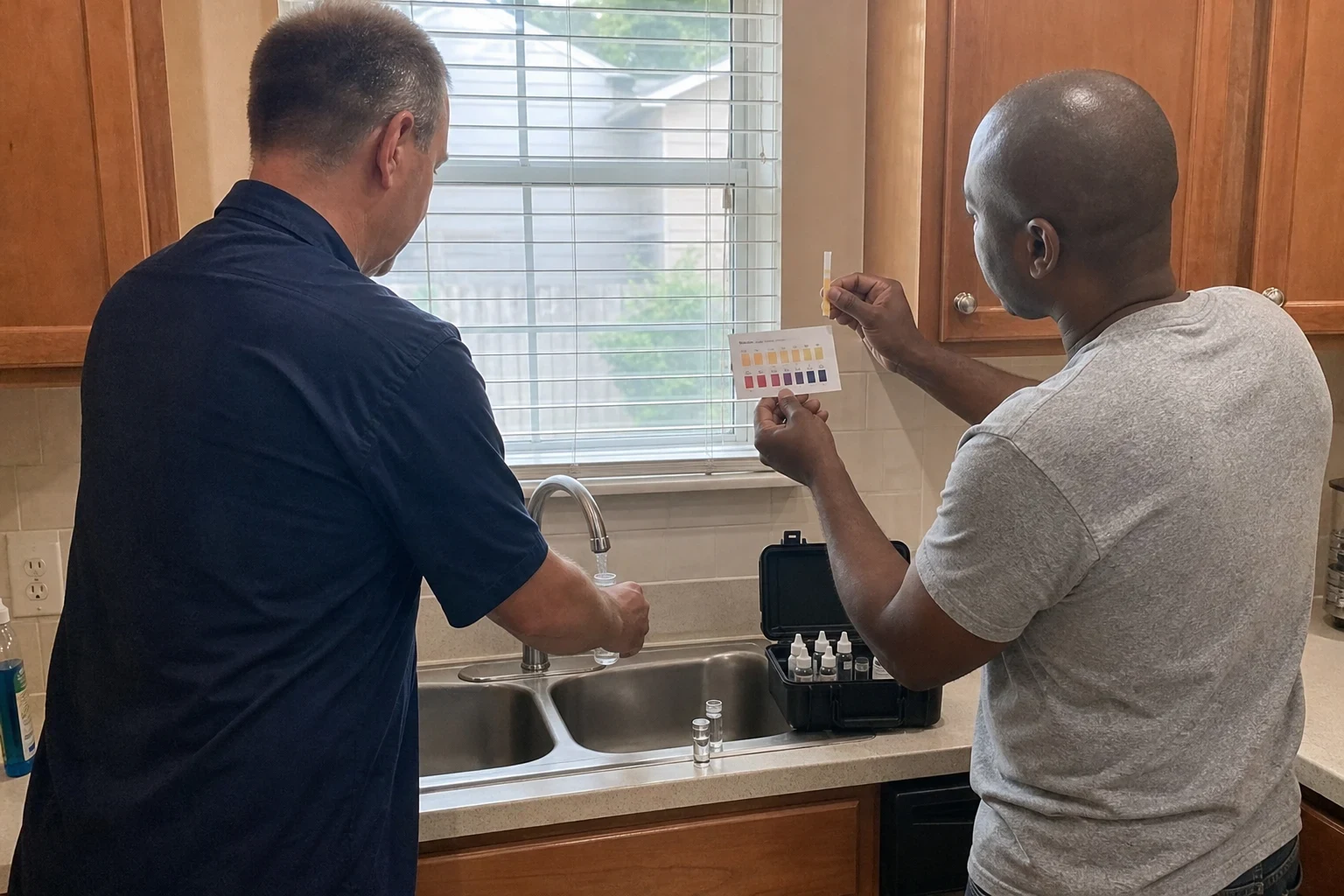
Before anyone recommends a filter, it helps to know what is in your water. We test at your tap, walk you through each result in plain language and tell you honestly whether your home needs treatment, and what kind, or nothing at all.
What a water test tells you
Most water in DeSoto meets drinking water standards when it leaves the treatment plant. What reaches your glass can be different. It passes through miles of main, then through the pipes, fittings and water heater inside your home, and each of those can add something along the way.
A test replaces guesswork with numbers. It shows hardness, iron, chlorine, pH and dissolved solids, and with a lab sample it can check for lead and other metals that come from household plumbing rather than the utility. We explain what each figure means, which ones are worth acting on and which are simply normal.
Testing is where we start every conversation about filtration. It keeps you from buying a softener you do not need or a carbon system sized for a problem you do not have.
What the test covers
- On-the-spot screening
- Right at your faucet, we check a cold-water sample for hardness, iron, chlorine, pH and total dissolved solids. You see each reading as it comes up.
- Lab samples where needed
- Home screening is not exact enough for lead, copper and other trace metals. For those, we collect a sample properly and send it to an independent lab.
- A check of your plumbing
- We record the visible pipe material, the water heater's age and condition, and any filters already in place. These often explain a reading better than the water does.
- A plain written summary
- Each result sits beside its accepted limit or normal range, with a brief note on what it means for your house. No jargon, and every number explained.
- A straight recommendation
- If your water is fine, you will hear that. If something deserves treatment, we lay out the choices, from a basic under-sink unit to whole-house filtration, and why one suits you better.
Signs it is time to test your water
A chlorine taste or smell
Utilities disinfect city water, and some people notice it more than others. A test shows the actual level so you can decide whether whole-house carbon filtration is worth it.
White crust on fixtures
Scale on faucets, shower glass and kettles points to hardness. Testing tells you how hard the water really is before anyone suggests a softener.
Orange or brown stains
Rust-colored marks in sinks, toilets or laundry can come from iron in the supply or from aging pipes. Knowing which one changes the fix.
Older plumbing in your home
Homes built before the late 1980s may have solder or fixtures that contain lead. Lead rarely shows any sign at all, so a lab test is the only way to know.
A new baby, a new home or a private well
Any change in who drinks the water, or where it comes from, is a sensible moment to get a clear baseline.
How a testing visit works
- 1
A short call first
You tell us what you have noticed and how old the home is. We suggest which tests make sense so you are not paying for ones you do not need.
- 2
Sampling at your tap
We usually draw from the kitchen faucet, the tap you drink from. For a lead test we may ask you to leave the water unused for several hours beforehand so the sample reflects what sits in your pipes.
- 3
Results and a conversation
We go over the on-site readings with you at the kitchen table, and explain lab results by phone once they come back. You can ask about any number.
- 4
A clear next step
That step might be nothing, a retest in a year, filter replacement and maintenance on equipment you already own, or a new system matched to the actual result.
What sets the price of a water test
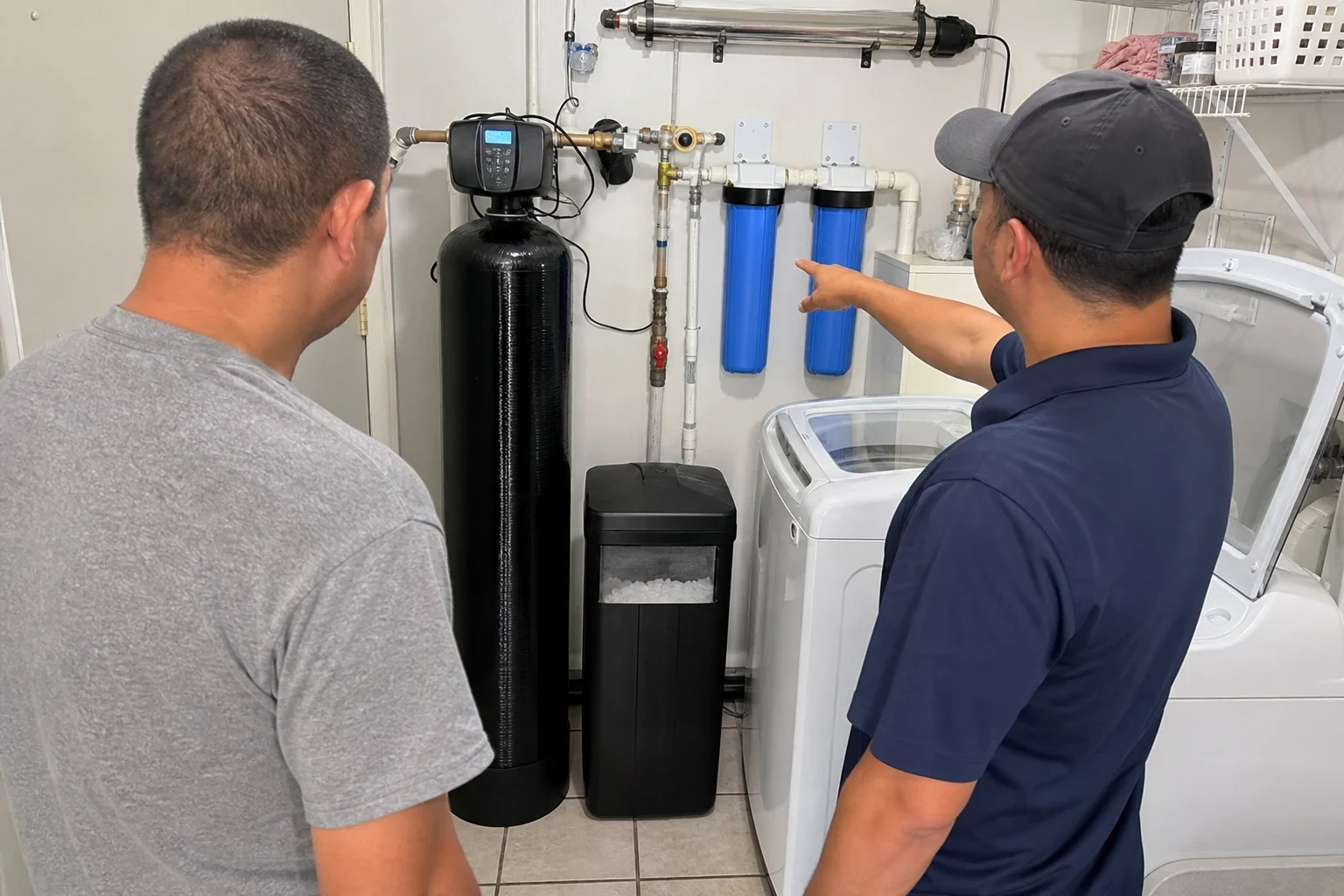
The price mostly depends on how much you want to learn. A basic screen at your faucet is the simplest visit, and lab work costs extra. Before taking any sample, we explain what each test covers so you know the price in advance.
- The tests you pick
- Hardness, chlorine and iron can be measured in your home. Lead, copper and other metals require a lab, which has a separate fee.
- City supply or private well
- Wells around the area need a wider panel that includes bacteria, since no utility is checking that water for you.
- How many taps we sample
- The kitchen faucet alone is usually plenty. A second fixture, or samples before and after a current filter, means more samples.
- Testing again later
- A second test after a system goes in shows it is working, and it can be scheduled as part of that same job.
Water testing questions
Something not covered here? (972) 362-9704
Is DeSoto city water unsafe to drink?
Public water systems must meet federal and state standards, and the utility publishes an annual water quality report. Most concerns we see are about taste, hardness or what older plumbing adds inside the home. Testing at your own tap is the clearest way to see your situation.
Can I just use test strips from the store?
Strips are fine for a rough idea of hardness or chlorine. They are not reliable for lead or low levels of metals, and they can be hard to read. If a strip shows something odd, a proper test is the sensible next step.
Will you try to sell me a system after the test?
Not if the results do not call for one. Plenty of tests end with good news and no purchase. When treatment does make sense, we explain the options and let you take your time deciding.
How long do lab results take?
On-site readings are ready during the visit. Lab turnaround depends on the tests and the lab, and we give you that timeframe when we take the sample. We call you to explain the results once they arrive.
Do I need a test before buying a water softener?
Yes. Water in our area varies, and many homes do not have water hard enough to justify a softener. A hardness test tells you whether one would make a real difference.
Start with the facts about your water
A test costs far less than the wrong system. We serve homes in DeSoto, Cedar Hill, Duncanville and the surrounding area.