ServicesUnder-sink reverse osmosis
Under-Sink Reverse Osmosis in DeSoto
Reverse osmosis gives you one faucet of very clean water for drinking, coffee and cooking. We explain how the system works, what it removes and what it asks of you over the years, then install it neatly in the cabinet you already have.
How reverse osmosis works and who it suits
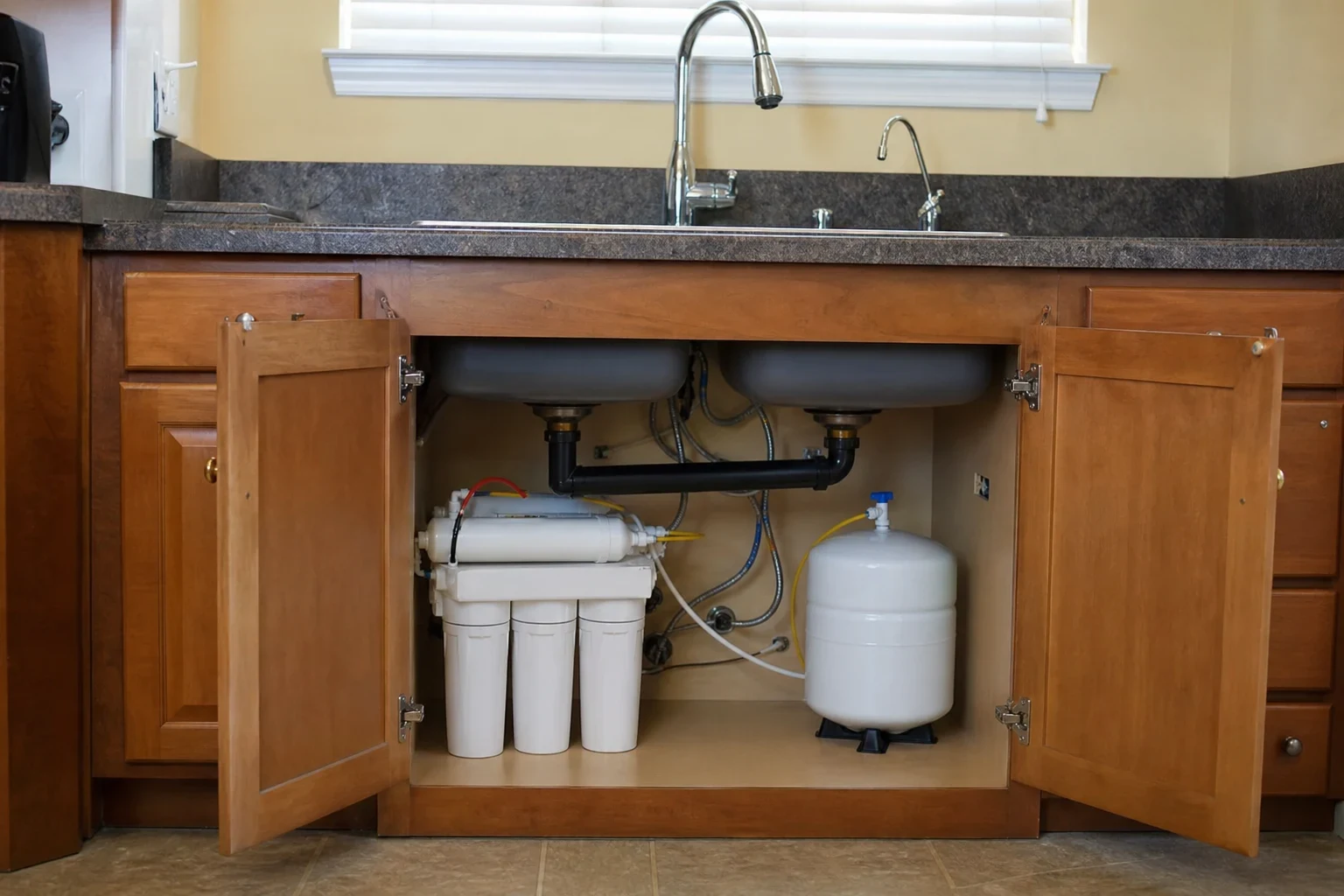
Reverse osmosis forces water through a membrane so fine it stops dissolved metals such as lead, most dissolved salts and many trace contaminants. Carbon filters on either side of the membrane take out chlorine and clean up the flavor. Treated water fills a small tank and pours from a separate faucet next to your regular one.
Because it serves a single tap, it treats drinking and cooking water only, not the shower or the washer. It fits best when your worry is what ends up in a glass or a pot. When chlorine odor fills the whole house, whole-house carbon filtration is usually where to start, and the two systems pair well.
Around DeSoto, city water generally meets drinking water standards. People usually add reverse osmosis for better taste, because of older pipes inside the home, or for an added safeguard at the kitchen sink.
What you get with the install
We check the cabinet before ordering
First we look under the sink at the space, the cold supply, the drain and your water pressure. A disposal, an instant hot water tap or a pull-out trash bin each change where the parts go.
The stages and the membrane
Most units run water through a sediment prefilter, then a carbon prefilter, then the membrane, then a final carbon filter. We explain what each one handles, so changing them later makes sense.
Its own faucet
If your sink has a spare sprayer or soap opening, we use it. When a new hole is needed, we drill it with a bit suited to your counter, go slowly on granite and quartz, and seal it neatly.
Tank, drain and supply hookups
The tank goes off to one side of the cabinet. A drain saddle takes the rinse water away, and a small valve on the cold line supplies the unit, so it can be turned off by itself.
A line to the fridge, if you want one
When the refrigerator sits close enough, we can connect it so ice and cold water come from the same filtered supply.
Flush and show-how
We run the new filters and first tank through, look over every connection for drips, and show you how to change the cartridges on your own.
Signs reverse osmosis may be right for your kitchen
- You buy bottled water every week
- Cases of bottles in the pantry usually mean the tap water is not trusted or not enjoyed. A reverse osmosis faucet replaces most of that habit.
- Your home has older plumbing
- Homes built before the mid-1980s may have lead solder on copper pipes. The city water can be fine at the meter and still pick up metals inside the house. A test tells you, and reverse osmosis is one of the most effective answers if lead shows up.
- A test showed high dissolved solids
- If water testing found a high reading for total dissolved solids, or a specific contaminant you want lower, the membrane is designed for exactly that.
- The fridge filter is not enough
- Refrigerator filters are small carbon cartridges. They help taste but do little for dissolved metals.
- You mix formula or cook from scratch
- Families preparing infant formula, or anyone who drinks a lot of plain water, often want the cleanest water at the one tap they use most.
How the day goes
- 1
A conversation by phone
You tell us what bothers you about the water and what is under your sink. If you have no test results, we may suggest starting with water testing so the system matches what is actually in your water.
- 2
Checking the cabinet and pressure
We confirm the fit and measure water pressure. Reverse osmosis works best above about 40 psi; below that, a small booster pump may be needed, and we tell you before the work starts.
- 3
Installation
We lay down a mat, clear the cabinet with you, shut off the cold line and mount the faucet, tank and filter housing. Most installs take a few hours.
- 4
Flush, check and hand over
The first tank is drained and refilled to clear carbon fines. We wipe the cabinet, take away packaging and leave you with notes on filter sizes and change intervals.
What changes the cost
Each quote lists every item and its price on its own line. The unit is one piece of the total; the counter, the cabinet and years of filter changes count just as much.
- With a tank or without
- Tank models are the simpler choice. Tankless models take less cabinet room and send less water to the drain, but cost more at the start.
- Counter material
- An opening that already exists is fastest. Cutting through stone or quartz takes longer and more care than laminate does.
- Extra stages and connections
- Adding a remineralization stage, a pressure booster pump or a refrigerator line means more parts and more labor.
- Long-term filter costs
- Prefilters typically get swapped every six to twelve months, and the membrane every two to four years. You see those costs before picking a model, and our filter replacement and maintenance visits can handle the changes for you.
Reverse osmosis questions we hear
- Does an RO system send a lot of water down the drain?
- Some water is used to rinse the membrane. Older units drained several gallons for every gallon of filtered water, while current models use much less. We can give you the ratio for any model we recommend.
- Does RO water taste bland?
- Some people find it lighter, since the membrane takes out minerals too. If you like a bit more body, a remineralization stage puts back a little calcium and magnesium.
- My city water meets standards. Why would I need this?
- You may not. Standards are met at the plant, which says nothing about the pipes in your house or how you like your water to taste. Testing is the fair way to decide.
- Is there room for it next to my disposal?
- Usually, in a standard kitchen cabinet. The tank can lie on its side or sit at the back, and we check the space before suggesting a unit.
- Can I do the filter changes on my own?
- Yes. The cartridges unscrew by hand, and we show you how the day we install. If you would rather have us come by on a schedule, we do that too.
Find out if reverse osmosis fits your kitchen
Tell us what you want from your drinking water and what is under your sink. We will explain the options plainly and give you a written quote.