ServicesIron and sediment filtration
Iron and Sediment Filtration in DeSoto
Orange rings in the toilet, gritty aerators or water that runs cloudy for a moment can have very different causes. We test first, show you what we found, and recommend a filter only when it will genuinely help your home.
What this filtration does, and when it makes sense
Sediment is anything solid riding along in your water: fine sand, flakes of pipe scale, bits of debris stirred up after work on a main. Iron is different. It can arrive as visible rust particles, or dissolved and clear until it meets air and turns orange in the tub. Each needs its own approach, so naming the problem correctly is most of the work.
A sediment filter is a physical screen or cartridge that catches particles above a set size, measured in microns. Dissolved iron passes straight through that screen, so it calls for a system that first turns the iron into particles and then traps them. We explain which one you have and why, before anything is installed.
Not every stain points to the water supply. In many homes around DeSoto, rust comes from an aging water heater or old galvanized lines, and a filter at the main would not reach it. When that is the case, we tell you.
What the work includes
Testing before recommending
We check iron, manganese and pH, and compare hot and cold taps. That comparison often shows whether the source is your supply or your water heater.
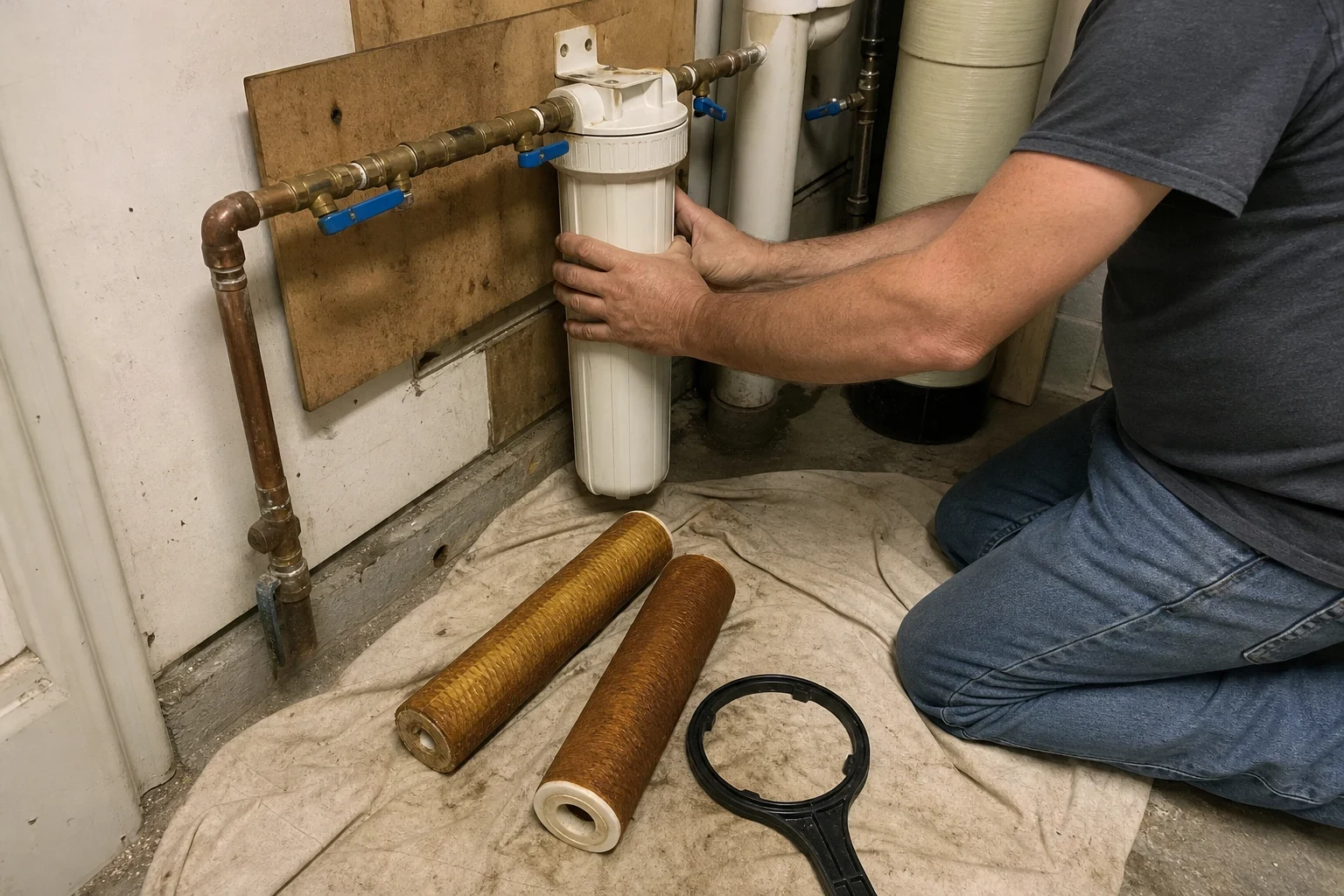
Sediment filters sized to your flow
We choose housing size and micron rating so the filter catches grit without starving your showers of pressure. In some homes two stages work best, a coarser screen first and a finer cartridge after it.
Iron removal systems
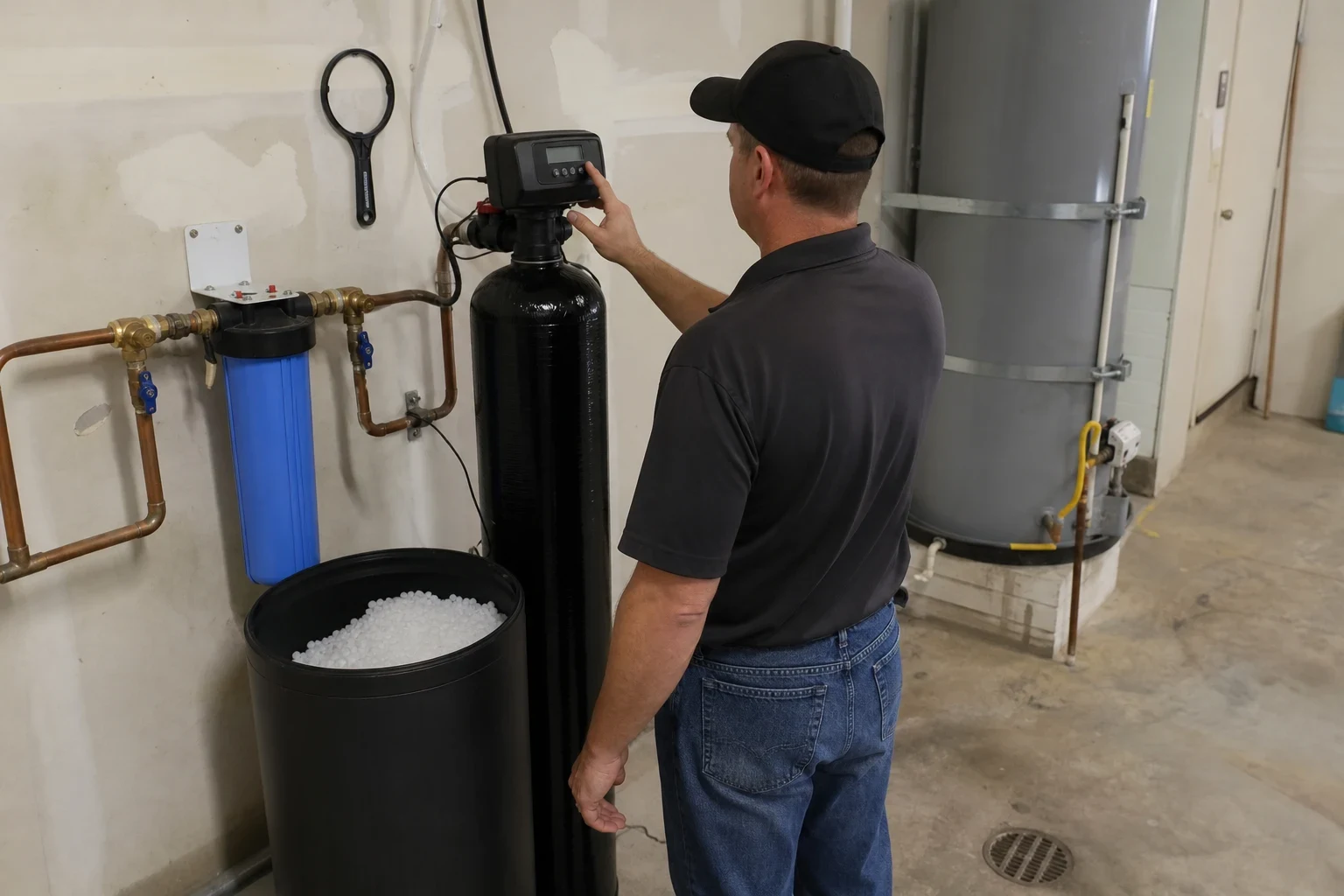
For dissolved iron, we fit a media tank that oxidizes the iron and holds it until the tank backwashes itself. This needs a drain and power nearby, which we plan for during the visit.
Careful installation
Systems go where the main line enters your home, with a bypass valve so water keeps flowing during service. We protect floors, test every joint for leaks, and leave the area as we found it.
A clear handover
We show you how the filter works, where the shutoffs are, and what a spent cartridge looks like. Ongoing service is covered on our filter replacement and maintenance page.
Clues that point to iron or grit
Rust marks on porcelain and fabric
Reddish rings in the toilet bowl, a tub that yellows near the drain, or whites that come out of the wash looking tinted are classic iron clues. Darker, almost charcoal smudges tend to mean manganese instead.
Sandy buildup in faucet screens
Unscrew an aerator and look. Tiny granules caught in the mesh mean solids are traveling through your lines.
A glass that settles
Fill a clear glass and let it stand. If haze sinks to the bottom and the water above turns clear, those suspended particles are what a sediment filter is built to catch.
A tinny, coin-like flavor
Drinking water that tastes faintly of metal usually carries more iron than it should. Coffee and tea can also look darker or taste flat.
Appliances and filters wearing out early
Grit scores the valves inside washers and dishwashers. It also chokes carbon and reverse osmosis cartridges well before the date on the box.
How a visit runs
- 1
A conversation by phone
You describe what you are seeing and where. We ask a few questions about your plumbing and water heater so we arrive prepared.
- 2
Testing and a plain explanation
We test at the tap and look at stains, aerators and the water heater. You get a straightforward answer on the likely cause, with photos of anything worth showing.
- 3
A written recommendation
We put the recommended filter, its location and its upkeep in writing, line by line. If a filter will not fix the problem, we say so.
- 4
Installation and cleanup
Most sediment filters install in a few hours. We shut off the water briefly, fit the system with a bypass, flush it, check for leaks and clean up before we leave.
What shapes the cost
A simple cartridge filter and a backwashing iron system sit at very different points, and the test result decides which one you need. You get a written, line-item estimate before any work begins, so you can see exactly what each part of the job covers.
- Type and amount of iron
- Rust particles can be caught by a cartridge. Dissolved iron or manganese calls for oxidizing media, a larger tank and more parts.
- Your home's flow needs
- More bathrooms and simultaneous use mean larger housings or tanks to keep pressure steady.
- Access at the main line
- Tight spaces, older pipe or a long run to the install point add labor time.
- Drain and power
- Backwashing systems need both nearby. If they are not, we explain what it takes to add them.
- Ongoing upkeep
- Cartridges are replaced on a schedule, while media systems need occasional checks. We lay out both so you can compare over several years.
Iron and sediment filter questions
Something not covered here? (972) 362-9704
Does a sediment filter cut water pressure?
Not in daily use, if it is sized right. Pressure falls when the housing is undersized or the cartridge is overdue. We size to your home's flow, and a slow drop just means it is time for a new cartridge.
I have city water. Is this really needed?
Frequently it is not. Treated city water normally carries little iron, and in many homes the stains come from the water heater or aging pipes. Testing hot and cold water separately shows which, and we only suggest a fix aimed at the real source.
Will filtering clear up stains I already have?
No. A filter prevents new stains, but old rust marks need an iron-specific cleaner. After the water is filtered, they should stay gone.
Will a water softener take care of iron?
Softeners can pull out a little dissolved iron, but iron can clog the resin over time. We go over your test results and explain whether a dedicated iron filter, a softener or neither is the right fit. Our water softeners page goes into that in more depth.
How often will I change cartridges?
That comes down to how much sediment is in your water and how much water you use. Some cartridges go for months, others sooner. We show you what a used-up one looks like and can take care of replacements.
Will it help my other filters last?
Yes. Putting a sediment stage in front of whole-house carbon filtration or under-sink reverse osmosis stops grit from clogging those finer filters early, so they get closer to their rated life.
Learn what is causing the stains
Describe what you see and we will explain the probable cause and the reasonable next step. Everything starts with a test, so any filter we recommend targets the actual source.