ServicesFilter replacement
Filter Replacement and Maintenance in DeSoto
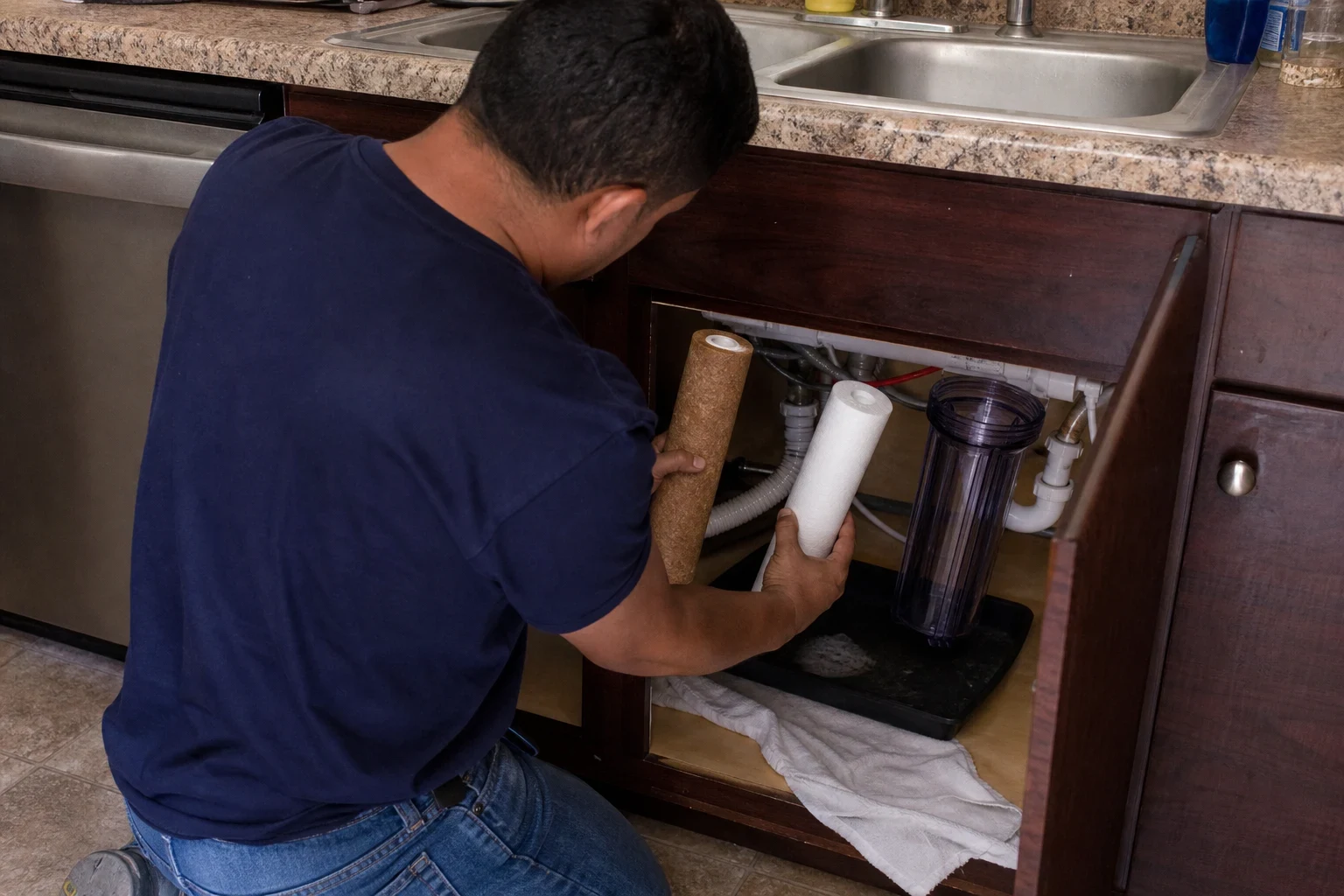
A filter only works while its cartridge or media still has capacity left. We change the parts that wear out, check the housings and seals, and show you what came out of the system so you know exactly what your water was passing through.
What maintenance actually does for your filter
Every filter is a consumable. Sediment cartridges fill with grit and slow your water down. Carbon adsorbs chlorine and taste compounds until its surface is used up, and then it quietly stops working while the water keeps flowing. A reverse osmosis membrane fouls slowly, so the change in your drinking water happens over months rather than overnight.
Regular service keeps the system doing the job you paid for. We replace the parts on a schedule that matches your household's water use, not a generic sticker date, and we look at the parts that are easy to overlook: O-rings, housing threads, tubing, check valves and the storage tank on an RO unit.
We also explain what we see. A brown sediment cartridge, a slimy prefilter or a cracked housing each tells you something different, and we tell you in plain terms what it means and whether anything else needs attention.
What a service visit includes
Cartridge and prefilter changes
We replace sediment and carbon cartridges in under-sink, countertop and whole-house housings. We match the micron rating and size to what your system was designed for, so flow and filtration stay where they should be.
Reverse osmosis membrane and postfilter
On an under-sink reverse osmosis system we change the prefilters, test the membrane's output, and replace the membrane and polishing filter when the reading shows it is due. We sanitize the lines and tank whenever the system is opened up.
Housings, seals and O-rings
Most slow leaks start at a dry or pinched O-ring. We clean each housing, inspect the threads for cracks, and seat fresh or lightly lubricated seals with food-grade silicone before anything goes back under pressure.
Whole-house and softener checks
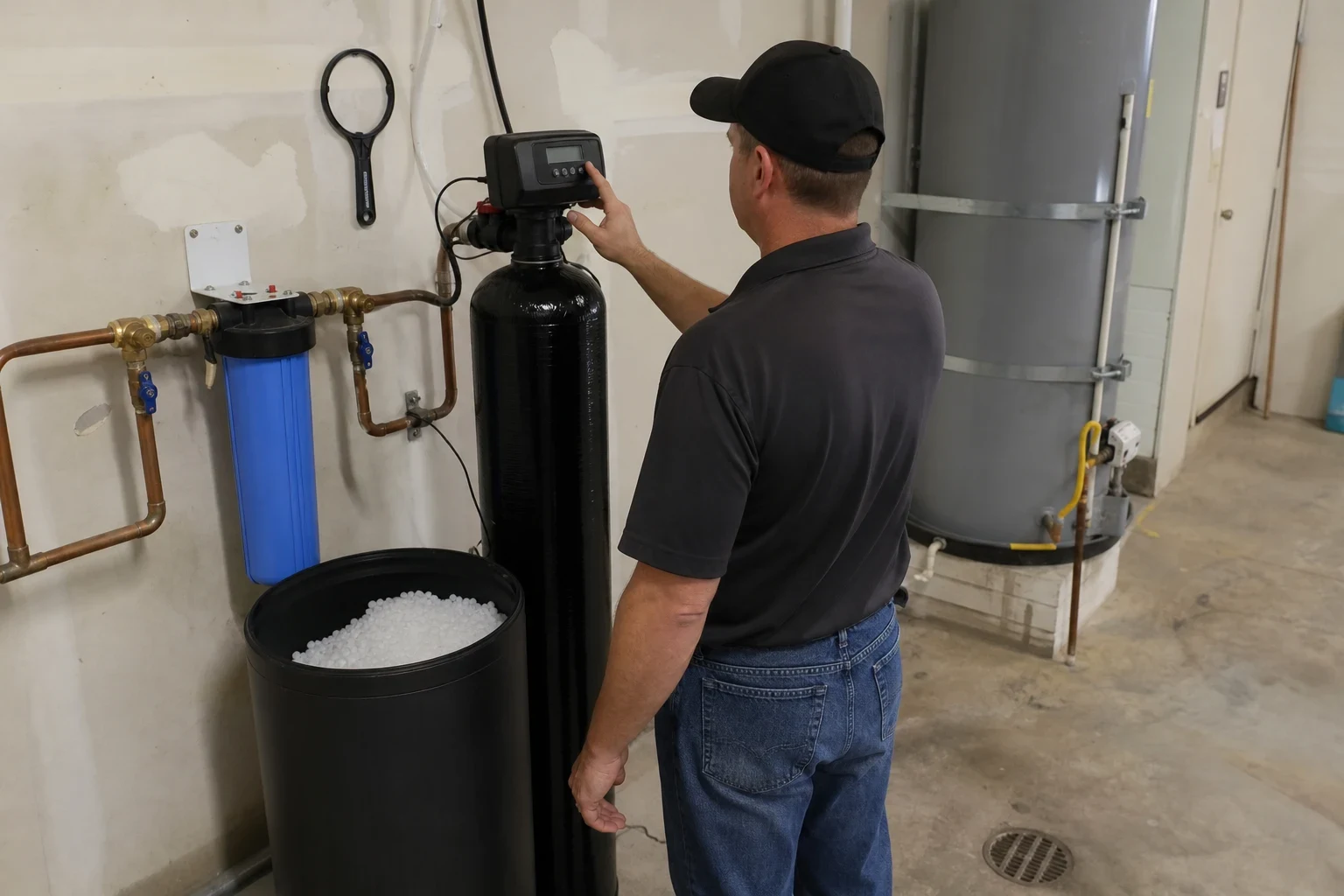
For tank systems we check the control valve settings, the bypass, and backwash timing. On a softener we look at the salt level and brine tank and confirm the settings still fit your hardness result.
Dated labels and a written record
Each housing gets a label with the date and the part used. You get a short written note of what we replaced and when the next change is likely due.
Clues your filters are past due
Weaker water pressure
A plugged sediment or whole-house cartridge chokes the flow. When the shower feels weaker than before, check the filter first.
Chlorine taste has returned
Once carbon is used up, the taste and odor it was catching pass right through. That usually means the cartridge or media is worn out.
The RO faucet runs slowly
If a glass takes much longer to fill at the drinking tap, or the tank never seems to fill up, look to worn prefilters, a fouled membrane or low tank pressure.
Wet spots or drips in the cabinet
Water around a housing or fitting needs attention now. Little leaks grow, and cabinet bottoms soak up water fast.
No one knows when it was last changed
With no date on the housing and no records, it has almost certainly been too long. That alone is a good reason to reset with a clear schedule.
What happens during the visit
- 1
A quick phone call
On the phone we ask what system you have and, if possible, the brand or model printed on the housing. That way we show up with the correct cartridges and seals.
- 2
Water off, pressure released
Once there, we shut the supply valve or switch to bypass, bleed off the pressure, and put down towels and a drip tray so floors and cabinets stay dry.
- 3
Swap, inspect, clean
Old parts come out and we show them to you. We clean the housings, look over the seals and fittings, and install new cartridges facing the right flow direction.
- 4
Flush and check for leaks
We repressurize gradually, run new carbon until the water is clear, and watch each joint at full pressure before we pack up.
- 5
Walkthrough and next date
We go over what we found, label each housing, and recommend when the next change should happen based on how much water you use.
What affects the cost of maintenance
The price of a visit depends mostly on the parts your system uses and how many of them are due. We tell you by phone what we expect to replace, and if we find something else on site, we explain it before doing any extra work.
- System type and number of stages
- A single sediment cartridge is a short job. A five-stage reverse osmosis unit with a membrane change, or a whole-house tank with media, involves more parts and more time.
- Cartridge brand and availability
- Some systems take standard-size cartridges. Others use proprietary parts that cost more or need ordering ahead.
- Condition of housings and fittings
- A cracked housing, stuck sump or brittle tubing adds parts and labor. We show you the problem first so the decision is yours.
- Access to the system
- A filter in an open utility area is quicker to service than one tucked behind plumbing in a tight cabinet or a garage corner.
Questions about filter upkeep
Something not covered here? (972) 362-9704
How often do my filters need changing?
Sediment and carbon prefilters are usually replaced every six to twelve months, and RO membranes go longer. Your actual timing depends on how much water you use and what it carries, so we base the schedule on how your old cartridges look, not a one-size number.
Will you work on a system someone else installed?
Yes. Most of our visits are to systems that came with the home or were put in by another company. If you can tell us the brand on the phone, we can usually have matching parts with us.
Can I replace the cartridges on my own?
Lots of homeowners do, and we will gladly show you during a visit. Typical slip-ups are a pinched O-ring, a housing tightened too hard, or skipping the carbon flush. If you would rather not bother, we keep it on a schedule for you.
How long will the water be off?
Generally just long enough to change parts and check for leaks. With whole-house systems we use the bypass where we can, so water may keep running for most of the visit.
What if my system is beyond repair?
Now and then a housing is cracked or parts are discontinued. We tell you straight whether fixing it is worth it. If replacing makes more sense, we can go over whole-house carbon filtration or under-sink reverse osmosis, and water testing can show which suits you.
Get your filters on a regular schedule again
Let us know what system you own and about when it was last serviced. We will tell you what is probably due and book a visit that fits your day.